-
2020
How Long are Youth Hockey Games? This Long!

Even though hockey’s origins are disputed, it has become one of the most well-known sports worldwide, with leagues ranging from ‘mini mite’ to professional. (Source: WAYHA) Whether your kid wants to become a professional hockey player, score the most points in a game, or be the fastest slapshot on a team, youth hockey is the place to start.
Youth hockey games last about an hour on average. Playing time varies in length from 36 minutes to 42 minutes, depending on the players’ age. However, tournament games are often set to three 12-minute periods due to the number of games being played.
Is There Checking in Bantam Hockey? The Truth Revealed
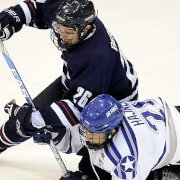
Hockey is a game notorious for its high level of contact between players, like body checking. Checking is considered legal in most professional hockey leagues, but the restrictions for such vary when it comes to lower levels of hockey. This leads many to wonder, is there checking in bantam hockey?
Checking is allowed in bantam hockey. They are allowed to check their opponents as long as it falls within the legal guidelines set by a national hockey league such as the USA Hockey or Hockey Canada organizations.
What Size Should A Hockey Stick Be For An 11 Year Old?

Whether playing on an ice hockey team or just some street hockey in your driveway, having the right size stick is crucial for ensuring the 11-year-old in your life is safe while they are playing! When measuring for a stick, it can result in difficulty playing or even injury if the wrong size is used.
The stick length recommended for a child in the intermediate age category, which spans from 11 years old up to 14 years old, is between 50” and 58”. However, the age group is less important than the child’s height, as this is what the stick length is based off of.
Should You Play Junior Hockey? Pros & Cons Over Other Sports

If you are a youth hockey player and are thinking about your hockey future, then you have likely given at least some consideration to joining a Junior Hockey team. After all, it is the goal of any young athlete to one day be a star in his or her sport, and many of the all-time greats of the National Hockey League got noticed by emerging through the Junior Hockey ranks.
You should play Junior Hockey if you enjoy the sport, and you understand that less than 1% of all hockey players go on to be professional stars. If you recognize this and are still willing to accept the hard work required for the trials of a hockey lifestyle, then playing Junior Hockey is a great choice.
Bullying In Youth Hockey: How To Deal With It

Bullying is an unfortunate fact of life when it comes to many youth sports leagues, and youth hockey is no different. Hockey is a historically rough and tumble sport with a history of allowing for (and even encouraging) violent competition and aggression between players. As a result, bullying is often present within hockey leagues, leaving kids in youth hockey leagues vulnerable to its effects.
Bullying in youth hockey should be addressed through monitoring, team building activities, and zero-tolerance policies. Figuring out when bullying is occurring and directly confronting the players involved is the only way to stop bullying at its source. Not doing so can have a severe adverse effect on the emotional and mental well-being of players.
Is Field Hockey Expensive?

The influence and popularity of field hockey stretches all around the globe. There are hundreds of clubs that come together at the national and international levels to compete in matches and tournaments. As the sport has grown in popularity, it has increased in cost as well, but is field hockey expensive?
Field hockey can be considered an expensive sport, with parents spending an average of over $2,000 annually on field hockey, related to equipment as well as travel and tournament fees. While the goalie’s equipment is the most expensive, the most significant expenses are not directly tied to the position played.
Field Hockey Stick – Short and Unique
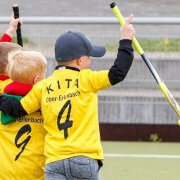
If you’re relatively new to the game of field hockey, you may wonder why the players’ sticks are so short. Most of the time, the players are in a forward bent position to keep the stick near the ball and the field’s surface, but wouldn’t it be better if they played with long sticks?
A field hockey ball travels very fast, and you need a maneuverable stick to control, launch, or stop such a fast-moving ball. Research has shown that a longer stick might give more leverage, but the short stick, combined with the forward-bending body position, is more functional on a field that provides shoe-grip.
Is the NCDC a Good League? Our Thoughts

As the first tuition-free junior hockey league in the Eastern United States, the National Collegiate Development Conference has worked tirelessly over the last three years to establish their name amongst ice hockey institutions and set themselves apart as a league who can turn junior ice hockey players into Division I seat holders. But is it all just too good to be true?
In our opinion, the players who dream of getting into Division I teams or the NHL from the NCDC have a much harder time than those coming from USA Hockey sanctioned leagues. The NCDC is a good league to help decent players play hockey for a few more years before going to college and then joining the workforce.
How Many Players Should Be on a Youth Hockey Team?

Sports are an excellent way for young kids to learn about competition, teamwork, and make friends all simultaneously, and youth hockey is a great sport to learn about all of these things and more. When looking for a league for your child to join, though, be sure to check out the coaches in the league, fellow parents, and how many players will be playing.
Depending on the league size, the number of players available, and the age group, anywhere from 13-20 players should be on a youth hockey team.
How Long is a Junior Hockey Stick? This Long!
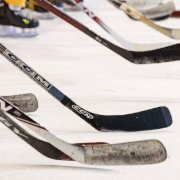
Determining the correct length for a junior hockey stick is an essential component for juniors to get the most out of their game. Though juniors can adapt to different length sticks, finding the right length ensures they are playing as naturally as possible. So, how long is a junior hockey stick?
A junior hockey stick is 50” – 54” long and corresponds typically to those aged 7-13. You want to ensure that your blade’s center is flat on the ground when in skates. Also, If you stand the stick straight up on its toe and the handle reaches between your chin and nose, it’s the correct length.