-
2020
Where Is Field Hockey Most Popular?
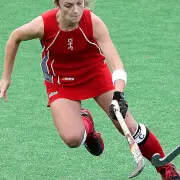
If you’re new to the sport of field hockey, you’ll be surprised to know that it has a massive following around the world. From the Euro Hockey League to the fields of India and Sri Lanka and the floodlight turfs down under, hockey has a passionate following in many areas. But where is it most popular?
Field hockey is most popular in Europe, Africa, Asia, and Australasia. India has been a powerhouse in the sport for the longest, and it has a massive following. However, Belgium, which is currently the highest-ranked team globally, and other European areas could rival them for the widest support base.
How Do You Dribble in Field Hockey?

To gain field hockey proficiency takes practice, commitment, and athletic ability. What really makes you stand out, particularly professional athletes, is the ability to master basic skills such as dribbling with control, speed, and agility.
Dribbling in field hockey requires a top left-hand and a lower right-hand grip on the stick while maintaining a wide stance with knees bent and the ball one foot away, all while quickly tapping the ball to move it further down the field. This requires observation skills, ball control, speed, practice, and confidence.
What Is a Long Hit in Field Hockey?

If you have ever watched a field hockey game or participated in the sport, you know that field hockey is a fast-paced game requiring a certain level of precision, speed, and skill. One of the essential field hockey skills to acquire is the ability to master a wide range of hits that the sport has to offer. Each hit is used at a specific time and for a particular purpose.
A long hit in field hockey is classified as a type of free hit awarded from a penalty. It is also known as a corner hit or a long corner. A long hit, also referred to as a drive, can be a technique employed when a player wishes to take a hit into the goal, clear the ball in a defensive move, or make a long pass.
What Are the Five Types of Fouls in Field Hockey?
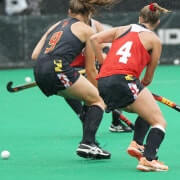
As with any sport, field hockey has rules, and a failure to abide by those rules can result in a foul and a penalty or multiple penalties. If you’re looking to get into field hockey, you’ll need to know the five types of fouls.
The five main types of fouls in field hockey are obstruction, backsticks, rough and dangerous play, touching the ball with your body, and undercutting. Each foul will result in a penalty as decided by the umpire. Rough and dangerous play is the one foul which may result in an immediate red card penalty and your possible ejection from the game.
Is Field Hockey Easy?
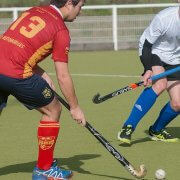
Field hockey, or outdoor hockey, is an outdoor game and team sport that is part of the hockey family. Known only as hockey in most places around the world, Americans and Canadians typically use the term “field hockey” to differentiate it from ice hockey. The uninitiated will be surprised just how easy the sport is after doing some initial training.
Field hockey is not easy for a new player, but competence can be achieved with practice of fundamental skills like dribbling, running with the ball, and accurate passing. The game also requires more technical skills such as bunting, flicking, and back sticking to master it. As a team sport, it helps to have essential social skills like working with others and effective communication.
How Does a Field Hockey Game Start?

Field hockey is a popular sport during which the players play the game on either grass, artificial turf, watered turf, or some type of synthetic field. There are typically ten players in the field on each team, while each team’s goalkeeper remains on each end of the field. If you’re new to the game, you might wonder how a field hockey game starts.
A field hockey game starts with a backward pass or “push back” from the center-forward to one of the backline players. The opposing team may not attempt to engage in play until the ball has been hit back. The previous method of starting a game with a “bully-off,” where two centre-forwards compete for the ball to start the game, has become obsolete.
Where Did Field Hockey Originate?

Surprisingly, we find ourselves in a “chicken or the egg” sort of situation when examining field hockey origins. Tracing the history of sports through myths and ancient representations can be challenging, but can we really know where field hockey originated?
Field hockey, as we know it today, originated in 18th-century British schools and spread globally by British soldiers during the era of colonization. The Celtic sports of hurling and shinty are the most direct field hockey ancestors. Many ancient civilizations played some form of a stick-and-ball game.
Are There Left- and Right-Handed Field Hockey Sticks?

Left- or right-hand dominance plays an essential role in our day-to-day lives, and it can significantly affect how we play sports, with allowances often being made regarding the equipment needed. Field hockey, however, is not so lenient.
Field hockey does not have left- and right-handed hockey sticks. One’s hand dominance does not dictate the equipment used, and all the sticks are right-handed. While left-handed sticks exist and can be bought, it is illegal to use them in official matches. Left-handed players must adapt to using the right-handed stick.
What Percentage of Youth Ice Hockey Players Make it to the NHL?

The reason most people play youth ice hockey is to one day fulfill the dream of playing the sport professionally. Rising from a young star to the top of the game is the lifelong goal for kids playing ice hockey at the youth level. But making it from a youth ice hockey star to a player in the National Hockey League is very difficult to do.
A player playing youth ice hockey has less than a 0.11% chance to play in the National Hockey League if they continue to play through high school from a purely statistical perspective. This is based on tracking 30,000 Ontario minor hockey players born in 1975.
What Are The Benefits Of A Shorter Hockey Stick?

Hockey sticks come in a variety of lengths and designs to suit player preferences. If the size and flex of the stick aren’t correct, then the risk of failure in performance is much greater. Therefore one needs to try out and test several lengths and sizes of sticks before they decide which one to purchase.
The benefits of shorter hockey sticks include easier handling and better puck control. Playing with them also makes it easier to have a bent posture for better balance and a faster pace. It is also easier for beginners to learn with shorter sticks as longer ones can get challenging to handle and control the puck with.